Mushroom cultivation

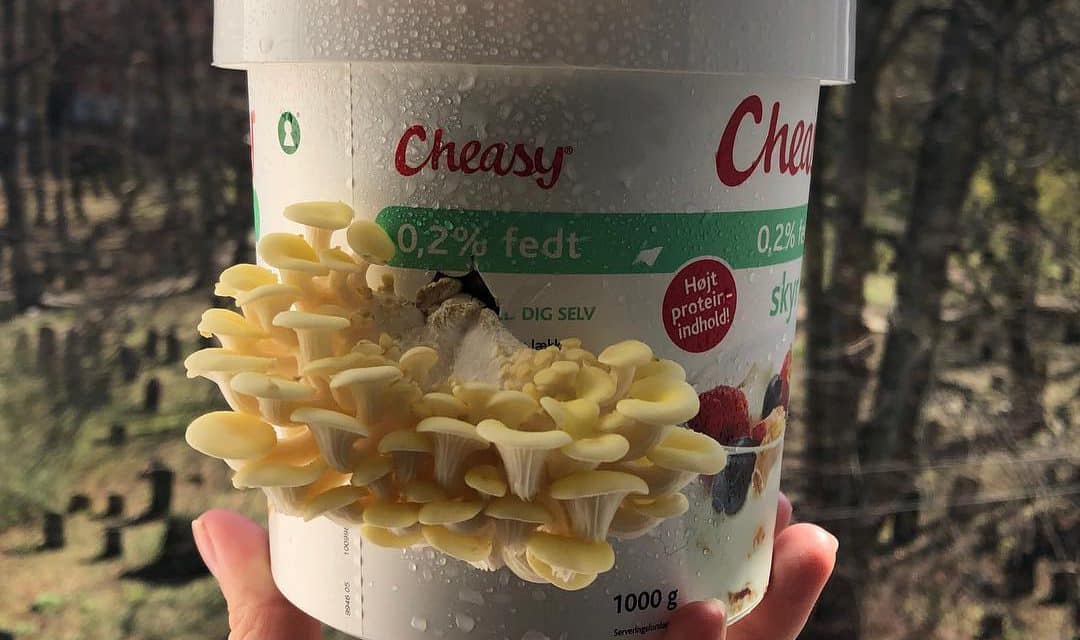
Svampe vokser ud af bøtte med skyr

Get out the coffee grounds when it comes to growing your own mushrooms!

Want to try your hand at growing your own mushrooms? Growing in coffee grounds is one of the easiest ways to grow mushrooms in your own kitchen, while combating resource waste! Finally, give a cleaned container such as a give a cleaned container such as a skyr bucket a new life as an oyster mushroom container when you’re trying to grow your own mushrooms.

With oyster mushroom mycelium you can easily grow your own mushrooms. Oyster mushrooms can be grown in coffee grounds, straw and hardwood. In this guide, we share our experiences and gather the best tips and tricks from other mushroom growers to help you get the most out of your mushroom cultivation.

Find mycelium for gray/brown oyster mushrooms here and for yellow oyster mushrooms here.

HOW TO GROW OYSTER MUSHROOMS IN COFFEE GROUNDS

INGREDIENTS for grow your own mushrooms:

  • A clean plastic bucket with lid or a plastic bag. Approx. 2.0 – 2.5 liters.
  • Approx. 100 g oyster mushroom mycelium. Must be stored in the fridge.
  • Coffee grounds, fresh and chilled.
  • A spoon to stir the mixture together.

Tip. We’ve had the best results using grounds from filter coffee, piston coffee or similar. The grounds from an espresso machine can be very dry.

METHOD (WITH FINISHED AMOUNT OF COFFEE GROUNDS – ENOUGH TO FILL YOUR CONTAINER):

  1. Cut 2-4 round holes approximately 1.0 cm in diameter in the container, depending on the size of the container. Disinfect the container and other tools with boiling water. If you are using a bag, you can cut 1-2 cm long grooves and skip disinfection.
  2. Put breathable tape such as sports tape or painter’s tape over the holes.
  3. Mix the coffee grounds and mycelium thoroughly in the container. The bag/bucket should be full and the contents should be well compressed. Put a lid on the bucket or close the bag tightly at the top.
  4. After 2-3 weeks, the mycelium will have passed through the coffee grounds and after another 1-2 weeks the first fungi will start to grow.
  5. As the mushrooms grow, it’s a good idea to spray them daily with an atomizer, otherwise they may dry out.

METHOD (WITH CONTINUOUS COFFEE GROUNDS):

  1. Cut 2-4 round holes approximately 1.0 cm in diameter in the container, depending on the size of the container. Disinfect the container and other tools with boiling water. If you are using a bag, you can cut 1-2 cm long grooves and skip disinfection.
  2. Put breathable tape such as sports tape or painter’s tape over the holes.
  3. Mix the first layer of fresh and cooled coffee grounds with mycelium – about one tablespoon of mycelium for a half-filled coffee filter. Crumble the mycelium with your fingers if it has grown together. Remember that you only need about 100 grams of mycelium for 2 liters of coffee grounds.
  4. Stir the mixture with a spoon and close the container.
    Wait for the mycelium to grow and the mixture to turn white and fluffy, then add more coffee grounds and mycelium. Do not mix the new mixture with the old mixture, but simply place it on top when you add new. It will mix as it goes.
  5. Continue the process until the bucket or bag is full.
  6. Put the lid on the bucket or close the bag tightly at the top and remove the tape from the holes so the sponges can come out easily
  7. After 1-2 weeks, the fungi will start to grow.

THE LIFE OF THE MUSHROOMS:

The mushrooms come in “vomit”. How much vomit you get depends on the nutrient content of the coffee grounds and the size of the container.

Humidity. Oyster mushrooms like reasonably high humidity. You can continuously spray water around the mushrooms with an atomizer, preferably daily. This helps to prevent them from drying out. If the mushrooms start to thin and ‘stretch’, it means they are dry. If possible, you can put the bag bucket in a larger container with a wet newspaper or similar at the bottom.

Temperature. Mushrooms grow best at around 18 degrees. They don’t die at higher or lower temperatures, but are happy to hibernate.

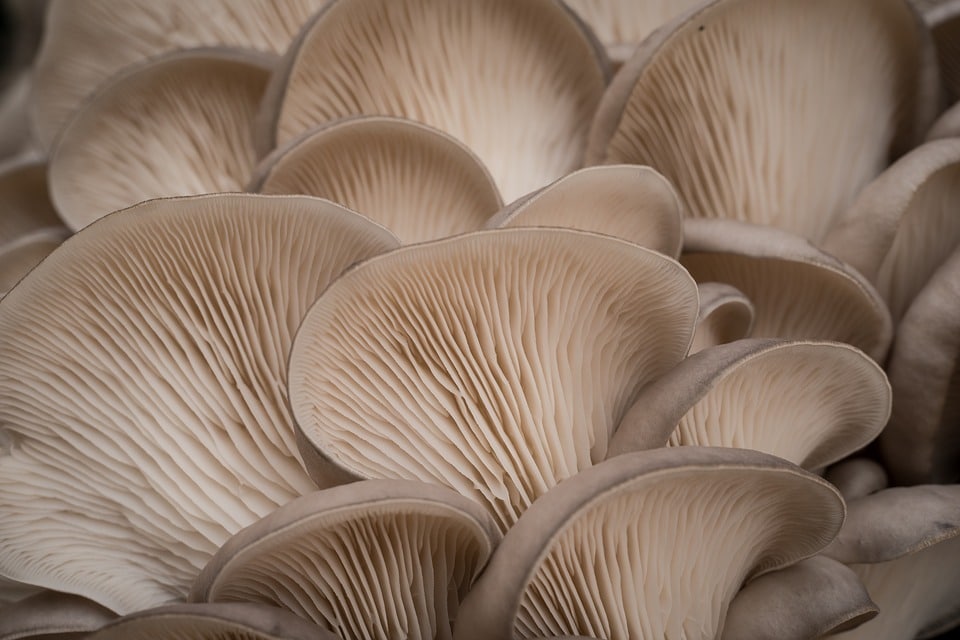
Maturity. Mushrooms are ripe and ready to be picked when they become bright and “sharp” at the edges. When the edges start to “bend up” it also typically means that they are ready to be picked.

Patience. Depending on temperature and humidity, the bucket/bag will release sponges 1-3 times. It pauses between each “burst”, so be patient

Tip. You can ‘feed’ the mixture according to the sourdough principle – cut off part of the culture and continue to feed it with coffee grounds in a new container.

Read more about growing mushrooms in e.g. straw or on a tree stump.

We love growing mushrooms and we enjoy following your projects at home. If you’d like to share your projects, join the Mushroom Growers Community Facebook group.
Svampe vokser ud af bøtte med skyr
Flere økologiske svampe i lag

Growing in straw can give good results, but requires more improvement and preferably more space.

With oyster mushroom mycelium you can easily grow your own mushrooms. Oyster mushrooms can be grown in coffee grounds, straw and hardwood. In this guide, we share our experiences and gather the best tips and tricks from other mushroom growers to help you get the most out of your mushroom cultivation.

Find mycelium for gray/brown oyster mushrooms here and for yellow oyster mushrooms here.

HOW TO GROW OYSTER MUSHROOMS IN STRAW

Oyster mushrooms can be grown in both cut straw and whole straw bales.

INGREDIENTS:

  • Healthy straw from barley, wheat or seed grass. You can grow in both whole bales and loose straw.
  • Heavy duty plastic bag or container for fermentation
  • Mycelium

There are several ways to prepare straw depending on how much straw and how much space you have. Below we describe how to prepare both pre-cut straw or whole bales of straw

PROCEDURE (WHOLE STRAW BALES)

  1. First, ferment the straw to prevent other fungal spores and insects from settling in.
  2. This also helps to “open” the straw and make it susceptible to the mycelium. To do this, the straw must be completely submerged under water for 14 days at a temperature of at least 10°C. This can either be done in a container or a strong plastic bag. Note that during the 14 days, the water will start to smell strong, but it should not be replaced.
  3. After the 14 days, place the bale on the long narrow side for about 24 hours to allow the water to drain.
  4. Then turn the bale over so that it lies on its largest side and poke 10-15 holes with a depth of 15-25 cm around the bale. This can be done with a plant stick or other pointed object.
  5. Mycelium is placed in the holes and the holes are sealed with damp straw.
  6. The straw bales can now be placed in greenhouses, garages, basements, stables etc. They can also be placed outdoors, somewhere damp and shady. The mycelium will then begin to penetrate the straw. How long this takes depends on the circumstances. The optimal temperature is 20-25°C. The temperature should not exceed 30°C.
  7. You can cover the bale with foil or place it in a plastic bag.
  8. Remember to make 10-15 holes of about 0.5 cm in the foil/sack to ensure air for the mushrooms.

METHOD (WITH PRE-TREATED STRAW):

  1. Pre-treated/fermented straw (see instructions above) is packed as tightly as possible in plastic bags.
  2. It is advantageous to cut the straw into 2-4 cm pieces and if possible, it is best done before fermentation, loose cut straw is fermented for about 7 days.
  3. At the same time as packing, add the mycelium with approx. 25 g/kg moist straw evenly distributed in the bag. Close the bag and make 10-15 horizontal cuts about 20mm long, spread over the surface of the bag.
  4. If you use clear plastic bags, the overgrowth can be observed. When the bag starts to be predominantly white, the mycelium has grown through and holes can be cut in the bag to allow the fungi to grow out.
Flere økologiske svampe i lag

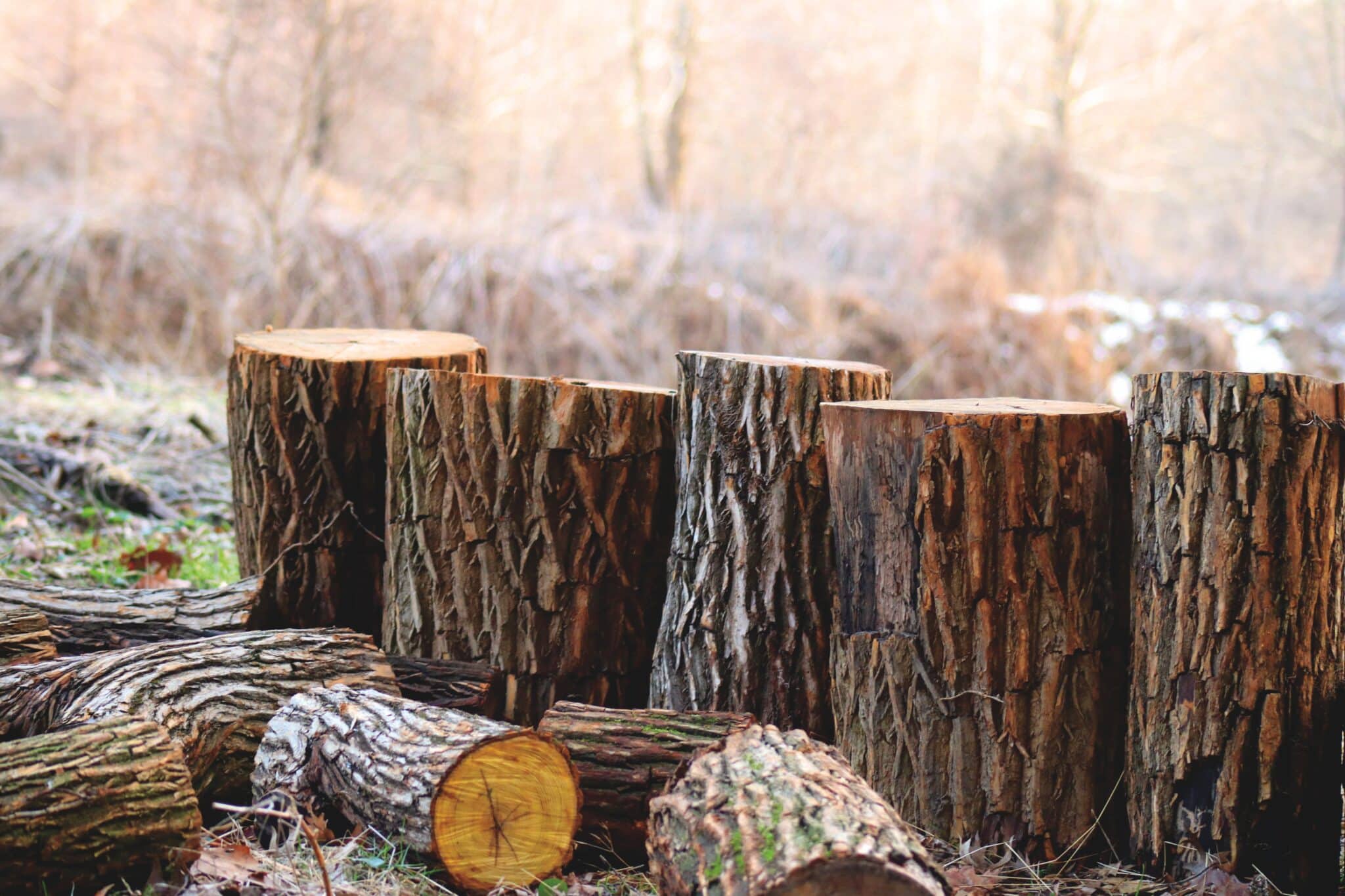
Hardwood cultivation is ideal for those who have just felled or have young stumps of beech, hornbeam, birch, maple, poplar, willow, rowan and fruit tree species. Growing on wood is a great place to start for the inexperienced.

With oyster mushrooms and shiitake mycelium, you can easily grow your own mushrooms. Oyster mushrooms can be grown in coffee grounds, straw and hardwood. In this guide, we share our experiences and gather the best tips and tricks from other mushroom growers to help you get the most out of your mushroom cultivation.

Find mycelium for gray/brown oyster mushrooms here and for yellow oyster mushrooms here.

HOW TO GROW OYSTER MUSHROOMS AND SHIITAKE IN HARDWOOD

Crops (wood or straw) planted outdoors in the fall should be inoculated 1 month before frost – this protects the mycelium. A timely fall crop has the advantage of high humidity and an early harvest the following year. If the stumps/stems can be stored frost-free, they can be grafted and grown all year round.

Before sawing/drilling, it’s a good idea to wash the stump with “chlorine water” and let the surface dry before sawing/drilling.

APPROACH (WITH STEMS):

INGREDIENTS:

  • Freshly felled hardwood logs (over 10 cm in diameter, length 40-60 cm)
  • Mycelium, depending on how many strains you have
  • A slice about 5 cm thick is sawn off one end.
  • An approximately 0.5 cm layer of mycelium is placed on the entire cut surface and the sawed-off slice is nailed as firmly as possible to ensure good contact between mycelium and wood.
  • Seal the cut with wide tape or similar.
  • The logs should now be covered with plastic or placed in plastic bags. The logs are perfect in places such as sheds, garages, stables or similar. You can also place them in a corner of the garden where it’s moist and shady. The optimal temperature for the strains is 20-25°C. At lower temperatures it will still work, just slower.
  • Depending on temperature, humidity and wood species, the mycelium grows through the wood in 4-12 months.
  • Then place the logs in a shady spot, burying them 10-15 cm with the ungrafted end – at the same time removing the graft cover.

APPROACH (WITH STUBS):

INGREDIENTS:

  • Fresh tree stumps
  • Mycelium
  • Cork stoppers

On fresh – max. 3/4 years after felling – hardwood stumps, oyster mushrooms and shiitake grow very well and at the same time the stump decomposes quickly and conveniently.

  1. Graft the stump using the intersection method as described above. In our experience, the intersection method gives the best results.
  2. Before sawing/drilling, it’s a good idea to wash the stump with “chlorine water” and let the surface dry before sawing/drilling. Alternatively, you can drill a series of holes 10 cm vertically into the stump with a wood drill bit, e.g. cork plug size (the more the better).
  3. Mycelium fills the holes
  4. Insert the cork plug – alternatively you can cover with a plastic bag.

As with straw culture, the harvest periods come in waves, but outdoor tree culture has a longer time between harvest periods, so you only get 2-3 harvests per year.

Pests. Snails in particular are very fond of mushrooms and can devour all the fruiting bodies in one night. Slug protection can be established in the form of spread lime, sawdust, wood ash. When growing in bags, the bag can be suspended.

Outdoor cultivation on straw bales can be impossible under heavy slug pressure, as eggs laid in the straw will cause slugs to emerge later from inside the straw bale with no chance of prevention.

We love growing mushrooms and we enjoy following your projects at home. If you want to share your projects, you can join the Facebook group Mushroom Growers Community.